
Head office
-
4th Floor, Surabhi Rama Complex, Plot No. 106, Suchitra Rd, above Kalyan Jewellers, Green Park, Kompally, Hyderabad, Telangana 500067
-
9044 43 9044,
90 62 62 34 34 ( Franchise ) - info@alphabetz.in

Trending Now
Trending Now
Safety First Designing the Ideal Infrastructure for a Preschool in Delhi
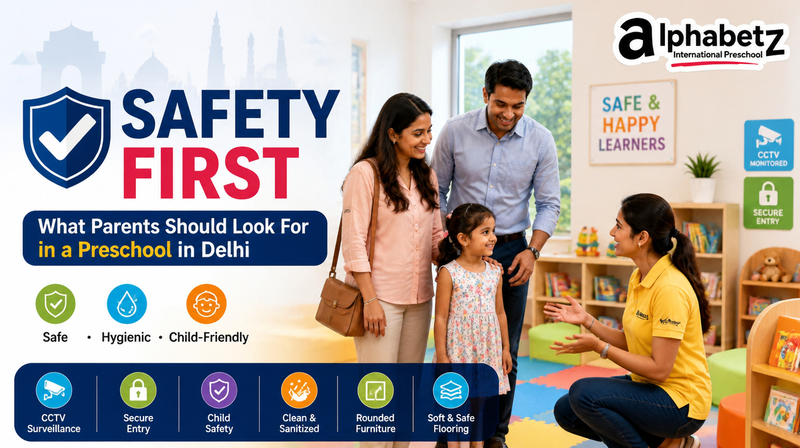
When parents search for a preschool in Delhi, safety is often one of their biggest concerns. A preschool's infrastructure plays a critical role in creating a secure, comfortable, and engaging environment where children can learn and grow. Beyond colorful classrooms and attractive facilities, a well-designed preschool should prioritize child safety, hygiene, accessibility, and development-focused learning spaces. For parents evaluating preschool options and entrepreneurs planning a preschool setup, understanding the role of infrastructure can help ensure children receive the support they need during their formative years.
Quick Answer
What Makes Preschool Infrastructure Safe and Effective?
A quality preschool should offer:
Secure entry and exit systems
Child-friendly furniture
Clean and hygienic facilities
Safe indoor and outdoor play areas
Well-ventilated classrooms
Adequate teacher supervision
A safe and thoughtfully designed environment helps children feel comfortable and confident throughout their learning journey. When children are surrounded by secure, clean, and engaging spaces, they are more likely to participate actively in classroom activities. Strong infrastructure also gives parents peace of mind, knowing their child is learning in a protected and nurturing setting.
These features help create a positive and secure learning experience for young children.
Why Infrastructure Matters in Early Childhood Education
Preschool infrastructure refers to the physical environment, facilities, classroom design, and safety systems that support children's daily learning experiences.
Young children spend several hours each day in preschool. Their surroundings directly influence:
Learning engagement
Emotional comfort
Physical safety
Social interaction
Confidence and independence
A thoughtfully designed preschool environment helps children feel secure while encouraging exploration and curiosity.
Essential Safety Features Every Preschool Should Have
Safety should be built into every aspect of preschool design.
Secure Entry and Exit Management
A preschool should have clear systems for monitoring who enters and exits the premises.
Important safety measures include:
Controlled visitor access
Verified child pickup procedures
Staff supervision during arrival and departure
Secure gates and entrances
These measures help create peace of mind for parents.
Child-Safe Classrooms
Young children are naturally curious and active. Classroom design should reduce potential risks while encouraging movement and learning.
Parents should look for:
Rounded furniture edges
Non-slip flooring
Secure storage units
Child-safe electrical fittings
Open movement areas
Safety should never limit exploration; instead, it should support it.
Hygiene and Sanitation Standards
Cleanliness is essential in any preschool environment.
A quality preschool should maintain:
Clean classrooms
Sanitized activity materials
Child-friendly washrooms
Safe drinking water facilities
Regular cleaning schedules
Good hygiene practices contribute to children's health and overall well-being.
Designing Classrooms That Support Learning
The physical classroom environment can significantly influence how children engage with learning activities.
Bright and Well-Ventilated Spaces
Natural light and proper ventilation help create a comfortable atmosphere for children.
Benefits include:
Better concentration
Improved comfort
Positive classroom experience
Healthier indoor environment
Many parents associate spacious and well-lit classrooms with a higher quality learning experience.
Age-Appropriate Furniture
Children learn best when the environment is designed for their size and developmental stage.
Age-appropriate furniture should:
Support proper posture
Allow independent movement
Encourage participation in activities
Reduce the risk of accidents
Comfortable learning spaces help children stay engaged throughout the day.
Interactive Learning Zones
Modern preschool classrooms often include dedicated spaces for different activities.
Examples include:
Reading corners
Art and creativity areas
Activity stations
Sensory learning spaces
These zones encourage hands-on learning and make the classroom environment more engaging.
Why Play Areas Are Essential in a Preschool
Play is a fundamental part of early childhood education.
Many parents actively look for preschools in Delhi offering play-based learning programs because play supports multiple areas of development.
Benefits of Outdoor Play
Outdoor activities help children:
Build physical strength
Improve coordination
Develop motor skills
Enhance confidence
Learn teamwork
Physical activity is an important part of healthy child development.
Benefits of Indoor Activity Spaces
Indoor activity zones support:
Creative thinking
Problem-solving
Imagination
Social interaction
Balanced preschool programs provide opportunities for both active play and focused learning.
Educational Approaches Supported by Good Infrastructure
Infrastructure and curriculum work together to create effective learning experiences.
Play-Based Learning: Play-based learning allows children to explore concepts naturally through activities and interaction. Children learn important skills while participating in games, storytelling, music, and creative projects.
Activity-Based Learning: Activity-based learning encourages children to actively participate rather than passively receive information. Classrooms designed for movement and exploration make these learning experiences more effective.
Experiential Learning: Experiential learning focuses on learning through direct experiences.
Children gain understanding by:
Observing
Exploring
Creating
Participating
Learning spaces should encourage curiosity and discovery.
Montessori-Inspired Learning: Many of the best educational approaches used by preschools in Delhi emphasize independence and hands-on experiences.
Montessori-inspired environments often include:
Child-accessible materials
Organized learning areas
Opportunities for self-directed activity
The classroom itself becomes an important learning tool.
What Parents Should Evaluate During a Preschool Visit
Visiting a preschool in person can help parents make a more informed decision.
Preschool Safety Checklist
Before admission, consider:
✓ Classroom cleanliness
✓ Child-safe furniture
✓ Teacher supervision
✓ Secure entry and exit systems
✓ Outdoor play safety
✓ Hygiene practices
✓ Ventilation and lighting
✓ Learning materials and activity spaces
✓ Emergency preparedness procedures
A preschool should feel welcoming, organized, and child-friendly from the moment you enter.
Infrastructure Considerations for Preschool Franchise Owners
For edupreneurs planning a preschool setup, infrastructure is one of the most important foundations for long-term success.
Choosing the Right Location
An ideal preschool location is often:
Easily accessible
Close to residential communities
Safe for children and families
Well-connected to surrounding neighborhoods
Planning Functional Learning Spaces
A preschool layout should accommodate:
Classrooms
Activity zones
Administrative areas
Parent interaction spaces
Indoor and outdoor play areas
Proper planning improves both learning experiences and operational efficiency.
Prioritizing Space, Hygiene, and Ventilation
According to recommended preschool setup practices, spacious classrooms, proper ventilation, and hygienic environments are essential for creating positive learning experiences.
A clean and organized environment helps both children and teachers function more effectively.
How Alphabetz Preschool Approaches Infrastructure Planning
At Alphabetz Preschool, learning environments are designed with a focus on safety, accessibility, and child development.
The approach emphasizes:
Child-friendly classroom layouts
Activity-based learning spaces
Hygienic environments
Safe movement areas
Spacious and well-ventilated classrooms
The goal is to create an environment where children feel comfortable, secure, and excited to learn every day.
Frequently Asked Questions
Why is infrastructure important in a preschool?
Infrastructure affects child safety, learning engagement, emotional comfort, and overall development during the early years.
What safety features should parents check before admission?
Parents should review entry security, classroom safety, hygiene standards, teacher supervision, and emergency preparedness procedures.
How important are outdoor play areas in preschool education?
Outdoor play supports physical development, coordination, confidence building, and social interaction.
What educational approaches benefit from activity-based classrooms?
Play-based learning, experiential learning, and Montessori-inspired methods all benefit from well-designed activity spaces.
How does NEP 2020 support play-based learning?
NEP 2020 encourages activity-based and child-centered learning approaches during early childhood education.
What should preschool franchise owners consider while setting up infrastructure?
Location, safety measures, classroom design, ventilation, hygiene, and future scalability should all be considered.
How can parents evaluate a preschool's safety standards?
Parents should observe classroom conditions, supervision practices, security systems, cleanliness, and overall child-friendly design.
Key Takeaways
Safe infrastructure is essential for effective preschool education.
Classroom design directly influences child engagement and comfort.
Play areas support physical, emotional, and social development.
Parents should evaluate safety, hygiene, and learning spaces before admission.
Preschool owners should prioritize child-centric and future-ready infrastructure.
NEP 2020 reinforces the importance of development-focused learning environments.
Soft CTA
Whether you are selecting a preschool for your child or planning to establish one, investing in safe, well-designed infrastructure creates an environment where children can learn, explore, and develop with confidence. Taking the time to evaluate these factors today can contribute to a stronger educational foundation for the future.

Content by
Alphabetz Preschool India
Welcome to the Alphabetz Preschool blog! Here, we delve into the exciting world of early childhood education through our innovative Alphabetz Franchise. Our program stands out with its focus on cutting-edge educational technology and a curriculum aligned with international standards, ensuring a holistic development approach. We equip our franchisees with extensive support and training, making the setup process smooth and efficient. Explore insights into running a successful preschool and discover how our franchise could be your next great business opportunity. Join us in shaping the future of education.
Recent Post




Most Popular




Quick Links
Find Us Here
All Rights Reserved with Ashoka FranMark © 2026 - By Ashoka Group Since 1969 W D & D
Franchise Query
